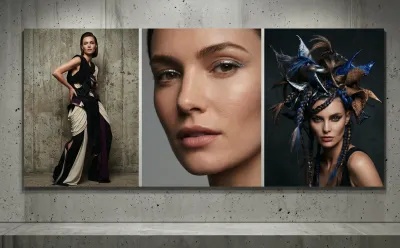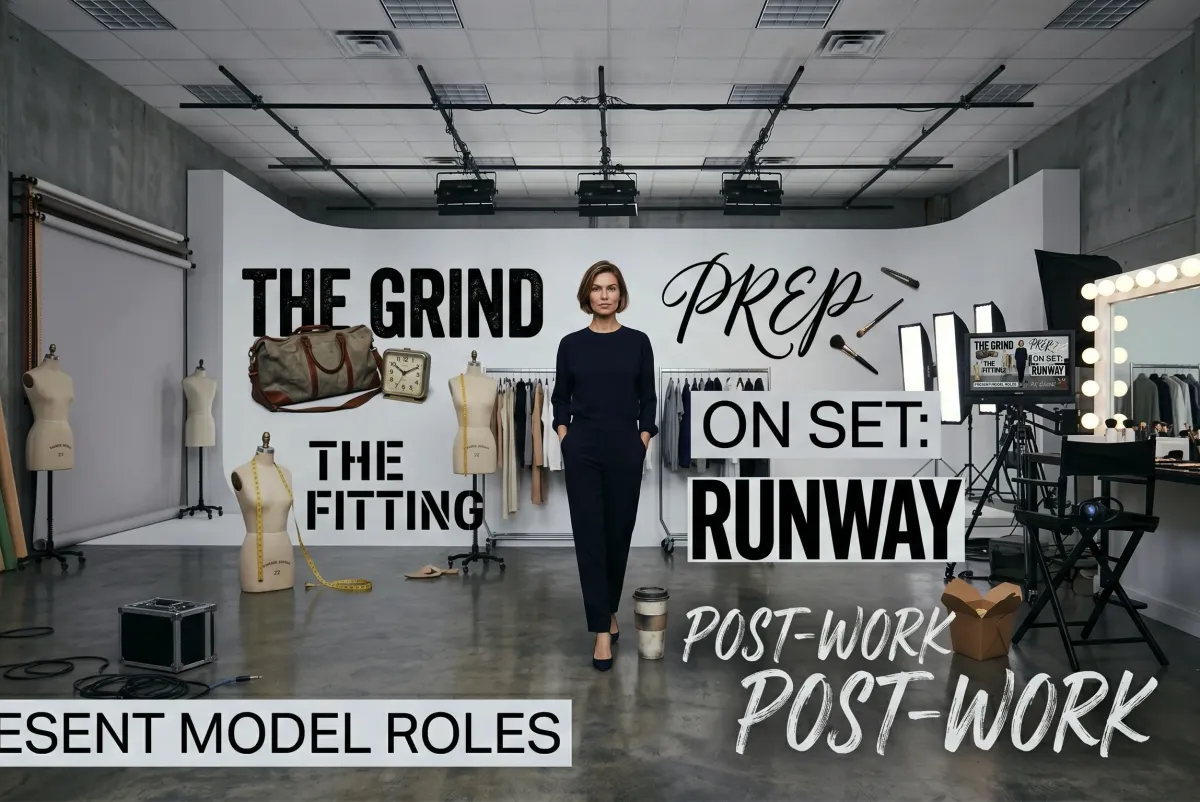
The public picture of modeling work is heavy on the dramatic moments (runway, glossy editorial spreads, brand campaign reveals) and light on the actual day to day reality of how working models spend their time. This article walks through 5 of the most common modeling segments and describes what the work actually looks like: the responsibilities, the schedule, the prep, and the on set reality. Useful for new models trying to figure out which segments fit, and for anyone outside the industry who wants a realistic picture of what working models actually do.
Five segments, five different jobs
Promotional and brand activation modeling. The most common day to day work in the U.S. industry. A working promo model arrives at an event venue (trade show booth, retail store, festival, brand activation pop up) typically 30 to 60 minutes before the event opens, gets briefed by the brand team, sets up wardrobe and signage if needed, then engages directly with attendees for 4 to 8 hours. The work is interactive: explaining the product or brand to attendees, demonstrating how it works, scanning lead capture forms, handing out samples, posing for photos with attendees, maintaining energy and brand voice through the full shift. Requires excellent verbal skills, stamina, and the ability to stay friendly and on message even during low energy hours.
Commercial and catalog modeling. A typical commercial shoot day starts with call time at 7 to 9 AM. Hair and makeup runs 60 to 120 minutes. Wardrobe fittings happen on set or were done in a fitting day prior. Active shooting runs 6 to 10 hours with breaks for lunch and wardrobe changes. The work involves hitting precise poses based on creative direction, holding poses for repeated takes, taking direction smoothly from the photographer and creative director, and maintaining energy across long days. Less verbal than promo work, more physical stamina and range.
Editorial fashion modeling. The longest production days in the industry. A magazine editorial shoot can run 10 to 14 hours and involve 5 to 12 distinct looks, with hair and wardrobe changes between each. The creative direction is more abstract than commercial work ("we want a sense of melancholy in this shot, look like you are remembering something") and requires the model to translate that into expression and posture. Production teams are larger (creative director, photographer, stylist, hair, makeup, prop, assistants) and the model is one part of a complex collaboration. Travel is common; international shoots last several days on location.
Trade show and atmosphere modeling. Multi day events at convention centers. Models work 6 to 10 hour shifts across 3 to 5 day shows, often standing for most of the shift. The work is interpersonal rather than photographic: representing the client brand, engaging with attendees, performing demos, maintaining energy. Rates are hourly rather than day rate. The skill set is more like hospitality than traditional modeling: charisma, stamina, brand knowledge, ability to handle awkward attendee interactions professionally.
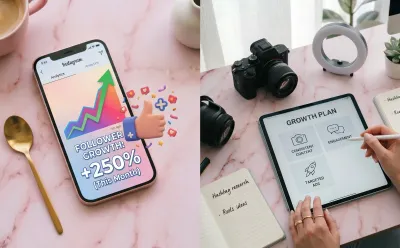
Creator and social media modeling. The newest category and increasingly the largest by total income for many working models. Day to day work includes shooting content (often self produced), editing video and photos, writing captions, posting on schedule across Instagram, TikTok, and other platforms, responding to audience comments and DMs, and managing brand partnership deliverables (timeline, content approval, posting schedule). Less concentrated production days, more sustained daily output. The job is closer to running a small media business than to traditional modeling work.
What unifies the work across segments
The common thread across all five segments: working models are professional collaborators on creative or commercial production. Reliability (showing up on time, prepared, and ready to work) matters more than any specific look or technique. Range (the ability to hit different moods, expressions, and physical positioning on direction) compounds across years of bookings. Professionalism in interpersonal work (with photographers, brands, agencies, fellow models) builds the reputation that produces repeat bookings.
The romantic public picture of modeling is heavy on the glamour moments and light on the day to day grind. The reality is that working models spend most of their professional time on preparation, travel, on set work, and the operational overhead of running a freelance career. The glamour moments are real but represent a small fraction of total working hours. Models who go in expecting the glamour and finding the grind tend to burn out; models who go in understanding it is a job tend to build sustainable careers.