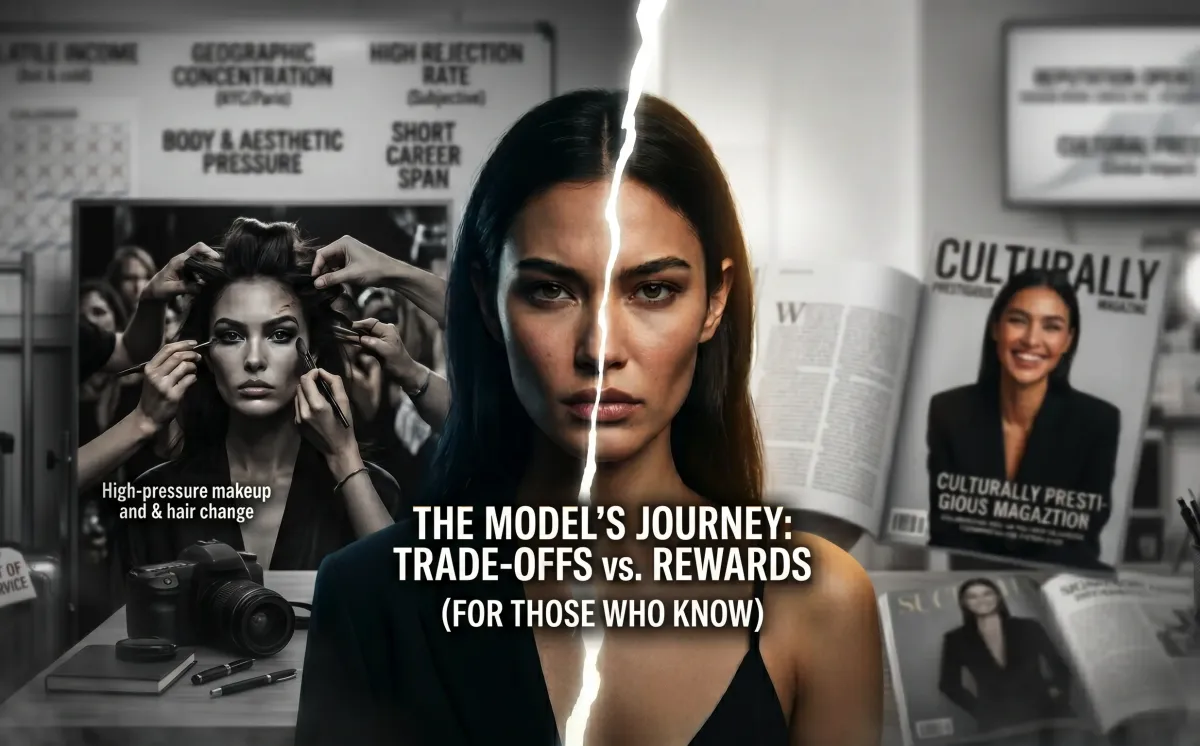
Fashion modeling has the highest public prestige of any modeling segment: magazine covers, runway shows, fashion advertising campaigns. The prestige is real and the work itself can be genuinely meaningful for the models who pursue it. The tradeoffs are also real and rarely discussed honestly in public coverage of the industry. This article covers the specific things that fashion models give up to pursue the high prestige path, with honest description of what each tradeoff looks like in practice. The goal is not to discourage anyone from fashion modeling but to ensure that models considering the path have a clear picture of what they are choosing.
The specific tradeoffs
Income volatility is higher than other segments. Fashion modeling income runs hot and cold. A working fashion model might earn 80,000 dollars in a strong campaign month and 2,000 dollars in a quiet month between bookings. The variance is structural: fashion work concentrates around fashion weeks, campaign launches, and editorial cycles rather than producing steady weekly booking volume. Models in commercial, promotional, and brand activation segments report substantially more consistent income flow even at similar annual totals. The fashion path requires financial discipline (substantial savings buffer, careful cash flow management) that other segments do not demand to the same degree.
Geographic concentration is real. Fashion editorial and high end commercial work concentrates in NYC, LA, Miami, Paris, Milan, London, Tokyo. Models pursuing fashion as primary segment realistically need to live in one of these markets, with periodic travel to the others for fashion weeks and major campaigns. Cost of living in fashion markets is substantially higher than tier 2 cities, which compresses the effective income of fashion bookings. Models pursuing other segments have meaningfully more geographic flexibility.
Rejection volume is high and constant. Fashion casting decisions are highly subjective and the rejection rate is substantial. A working fashion model attends 30 to 60 castings monthly and books 2 to 6 of them. The rejection volume is psychologically demanding even for models who intellectually understand that casting decisions are about specific brand fit rather than personal worth. Working pros develop coping strategies (separating work from identity, processing rejection without internalizing it, maintaining perspective on the volume statistics) that take time to build.
Body and aesthetic pressure is intense. Fashion casting historically maintained narrow physical specifications (height, body type, specific aesthetic features) and while representation has broadened the casting pool meaningfully since 2017, the pressure on physical maintenance in fashion remains higher than in commercial or other segments. The lifestyle requirements (specific eating patterns, intensive exercise, skin and hair maintenance) consume substantial time and produce real psychological cost. Models in fashion segments report the highest rates of body image issues and disordered eating patterns in industry surveys.
Career length is shorter than most segments. Productive fashion editorial careers typically run 5 to 12 years before the model transitions out of active editorial casting. Top tier models extend longer; the median is meaningfully shorter than commercial modeling careers (which can extend 15 to 25 years productive in many cases). Models pursuing fashion need to plan for the post fashion transition from early in the career; the eventual transition catches unprepared models difficult.
Travel demands are sustained and demanding. Fashion work involves substantial travel: fashion weeks across major cities, campaign shoots in international locations, editorial work that ships models to specific shoot locations. The travel is romanticized in public coverage and exhausting in practice (constant time zone shifts, hotel living, disrupted routines, disrupted personal relationships). Working pros report that the travel romance dissipates within the first year and the cumulative wear becomes a real cost across years.
Personal life impact is real. The combination of income volatility, geographic concentration, intense schedule, travel demands, and body maintenance pressure produces real impact on personal relationships, mental health, and quality of life outside work. Working fashion models describe specific challenges: maintaining relationships with people outside the industry, sustaining hobbies and interests beyond work, managing the disorientation of constantly shifting locations and schedules.
What the tradeoffs are worth
The tradeoffs above are real costs of the fashion path. They are not reasons to avoid fashion modeling; they are factors to evaluate honestly when deciding whether the path fits your goals and constraints. Working fashion models who pursued the path with clear awareness of the tradeoffs report that the work itself was meaningful enough to justify the costs. Working fashion models who pursued the path expecting glamour without the underlying tradeoffs often left the segment after a few years feeling that the cost was higher than the public picture suggested.
The case for fashion modeling despite the tradeoffs:
The work itself is creatively meaningful. Fashion editorial and runway work involves collaboration with talented photographers, stylists, designers, and creative directors at the top of their craft. Models who find meaning in collaborative creative work can have genuinely fulfilling careers in this segment that commercial work does not match.
The career platform produces optionality. Established fashion modeling reputations open doors in adjacent industries: fashion brand consulting, creative direction, behind camera roles, fashion media, designer collaborations, brand entrepreneurship. The fashion path produces transition options that other modeling segments do not.
The income upside is real for top tier success. The fashion path has the largest income upside of any modeling segment; top tier fashion models earn substantially more than top tier commercial models. The path is high variance with low base rate of reaching top tier, but the upside is genuinely larger.
The cultural prestige translates beyond the industry. Established fashion model reputations carry into adjacent cultural contexts (publishing, brand entrepreneurship, philanthropy, public speaking) in ways that commercial model reputations do not. Models who care about cultural visibility beyond just modeling earnings find fashion uniquely positioned for that goal.
The honest assessment for models considering fashion: the segment offers meaningful work and substantial upside at the cost of genuinely demanding tradeoffs. The path fits some models very well and fits others poorly. Choosing with clear awareness of both sides produces sustainable careers; choosing with awareness of only the prestige side often produces difficult exits within a few years. Treat the choice seriously, factor the tradeoffs honestly, and commit only if the work is what you actually want to be doing rather than what the public picture suggests should be glamorous.