Trade show booth staffing is one of the highest-volume modeling categories in the US, and one of the most variable in execution quality. The same booth, same brief, same hours can be transformed by good talent or sunk by bad. This guide covers what actually matters when hiring trade show models, separated from the boilerplate that most rate-guide articles repeat.
What good trade show talent does
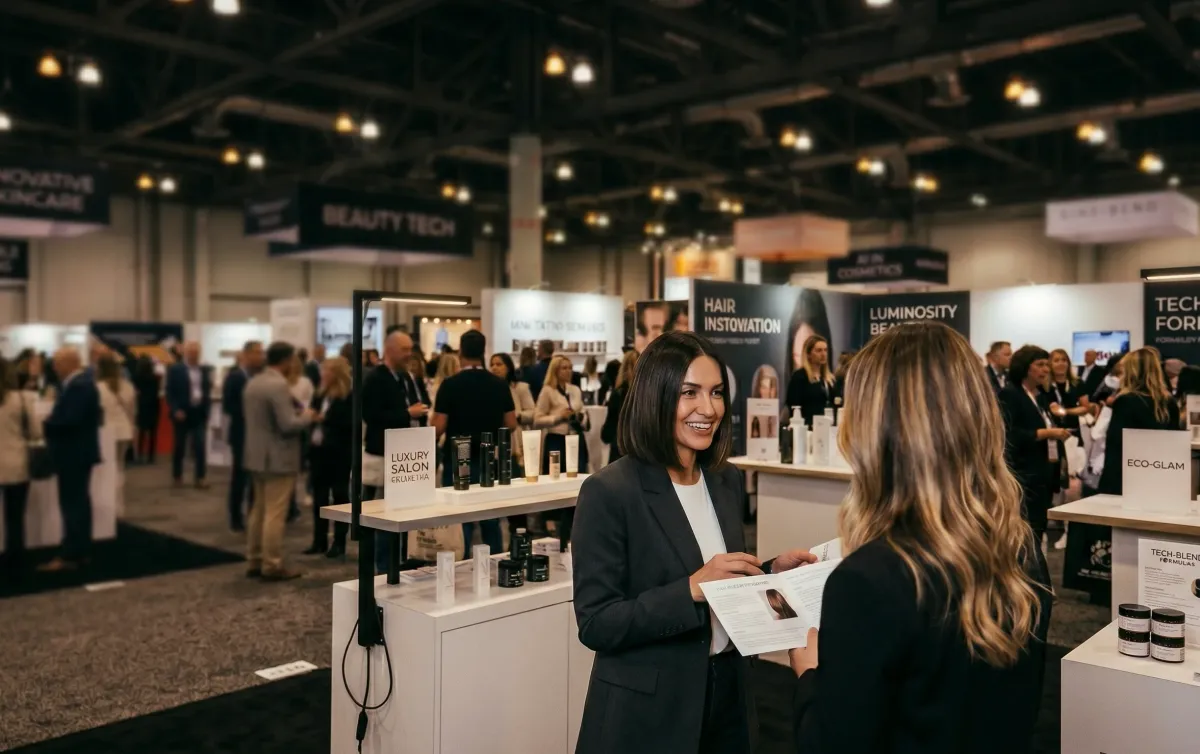
Trade show booth work is endurance work. Show days run 8-12 hours, often three to five days in a row, in convention hall lighting on hard floors, talking to a constantly rotating audience. The skills that make someone good at it are not the skills that make someone good at fashion, editorial, or even most brand activation.
Strong booth talent reads visitors quickly: who is a serious lead, who is a tire-kicker, who is a competitor scouting, who needs the booth experience to be welcoming and warm. They learn the product or brief in advance and can hold a 60-second qualifying conversation without leaning on a script. They notice when the lead-capture system breaks and flag it. They stay energetic through hour 9 of day 3.
The portfolio signals to look for: a recent track record at major shows (CES, IAAPA, MAGIC, AWS re:Invent, HIMSS, dozens of others depending on industry), preferably more than one. Trade show experience compounds, and the difference between "first show" and "twentieth show" is enormous on the booth floor. References from previous booth bookings are worth getting and reading.
How to brief trade show models
The brief should cover four things explicitly. The product or service: what does the company actually sell, who is the buyer, what is the qualifying conversation. The booth flow: are visitors approached or do they self-approach, what is the ideal first 30 seconds, who handles the technical handoff. The lead capture: what tool, what fields, what counts as a lead. The brand voice: how does the company talk about itself, are there terms to use or avoid, how formal or casual.
Send the brief 5-7 days before the show, not the morning of. Talent that books trade show work consistently treats brief review as billable prep time. Expect them to come to a 30-minute pre-show call ready with questions. The clients who treat that prep call as optional get the worst booth performance.
Day-of: have someone from the company on-site to answer questions, manage breaks, and handle the technical handoffs that talent shouldn't be doing. Trade show talent isn't a sales rep replacement, they're a sales rep multiplier. The handoff still needs a real human on the brand side.
The biggest hiring mistake at trade shows is optimizing on cost over experience. The hourly delta between a strong working pro and a beginner is $20-$40, which on a 4-day show with two staff is somewhere between $1,500-$3,000. The lead delta between strong and weak booth performance on a $50K booth investment is much larger than that. Hire the experienced talent, brief them well, and treat the booking as the high-leverage marketing decision it is.