The risks of a modeling career have shifted substantially since 2018. Some of the legacy risks have meaningfully decreased: the diversity gap has narrowed (though not disappeared), industry harassment culture has structural pushback that did not exist a decade ago (see article 61 in this library on the post #MeToo industry), and the "you must move to NYC or LA" geographic concentration has eased with remote casting. But new risks have emerged that did not exist 5 years ago: subscription platform decisions that affect career trajectory, AI generated imagery competing for commercial work, and the volatile economics of social media driven income streams.
This article covers the realistic risk picture for a modeling career in 2026, what has actually changed, and what working models should think about when planning a career in this industry.
The traditional risks that still matter
Income volatility. Modeling income is freelance, project based, and irregular. Even working models have months with substantial income and months with little. Building financial resilience (3 to 6 months of expenses in savings, separate business and personal accounts, quarterly tax payment discipline) is the basic professional infrastructure that separates models who survive lean periods from those who do not. This risk has not changed and probably will not.
Power asymmetry in casting. Models in early career have less leverage than established models, which the industry knows and sometimes exploits. Bad clients, exploitative agencies, and predatory photographers still exist. The structural protections have improved (state legislation, advocacy organizations, reporting infrastructure) but the underlying asymmetry persists. Knowing your rights, documenting interactions, and using verified booking channels (marketplaces, established agencies) are the practical protections.
Body and aesthetic pressure. The industry's demands on physical appearance produce real psychological pressure on models. Eating disorders, body dysmorphia, and the mental health cost of constant aesthetic evaluation are documented industry risks. These have not gone away with the broader cultural shifts toward body diversity. Working models report that the pressure is real even when they intellectually understand the industry's distortions.
Career length uncertainty. Most modeling careers have shorter productive windows than traditional careers: 5 to 15 years depending on segment. Models who plan for the post modeling transition (savings, second career skills, behind camera roles, business ownership) handle the eventual transition better than those who treat modeling as their permanent career. The risk is not that modeling ends; it is that models do not plan for the end.
The newer risks worth knowing about
Subscription platform decisions are one way. Joining OnlyFans or Fansly can produce real income but affects future booking opportunities in some traditional commercial segments that screen for adult content history. Once content is published, it is realistically permanent (screenshots, redistribution, archival). Models considering subscription content should make the decision deliberately with full awareness of the tradeoffs rather than drift into it. The decision is reversible only in the sense that you can stop posting; existing content is permanent.
AI generated imagery is a real new risk. Brands increasingly use AI generated models for some commercial work that previously employed real models. The impact has been concentrated in specific segments (e commerce product modeling, generic stock imagery, advertising placements where the brand wants a model "look" without the cost or scheduling of actual booking). The impact on full body editorial, brand campaigns featuring named models, and lifestyle work has been more limited so far. Working models should know which segments of their income stream are most exposed to AI competition and plan accordingly.
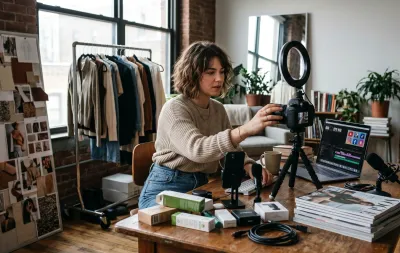
Social media income volatility. Models who built income around brand partnerships on a single platform face platform risk: algorithm changes, account suspension issues, shifting brand budgets, or platform decline can cut income substantially with little warning. The risk is structurally similar to having one main client who can fire you. Diversifying across multiple platforms and multiple income streams reduces the exposure but does not eliminate it.
The "creator burnout" cycle. The pace of social media content production for working models who treat it as a primary income stream is genuinely demanding. Burnout (the well documented pattern of sustained content production producing emotional exhaustion and reduced creative output) is a real industry risk that has emerged as social media has become central to working careers. Building sustainable production rhythms (batching content production, taking real time off, avoiding the "every moment is a content opportunity" trap) is the protective work.
Geographic concentration risk has decreased but not disappeared. Remote casting has loosened the requirement to live in NYC or LA, but the industry's geographic concentration in those markets still affects career trajectory for models pursuing fashion or editorial as primary segments. Models in tier 2 cities can build real careers but at slower pace and with lower ceiling for the most prestigious work. Knowing which segments require physical presence in major markets is part of realistic career planning.
The risks of a modeling career in 2026 are real, knowable, and manageable for models who plan for them. The 2018 era framing of "models are exploited and underpaid" was incomplete: the industry exploits models when models lack the information and infrastructure to push back. Working pros who understand the industry's risk landscape, build the professional and financial infrastructure to weather volatility, and make career decisions with eyes open report reasonable career outcomes that the legacy "starving model" narrative undersells.